Sleep & Materials
Natural Latex Mattress Shopping: A Guide to Feel, Support, and Materials
Natural latex has a reputation for buoyant comfort, responsive support, and materials drawn from rubber-tree sap. But a label alone cannot tell you how a mattress will feel—or whether it will suit your body, sleep position, and preferences. The details that matter are in the construction: firmness, latex type, layer arrangement, cover, and the standards behind claims about materials.
Published November 18, 2026
The first question is not whether latex is “best”
It is whether a particular mattress feels right to you. That sounds obvious, yet mattress shopping often turns into a contest of superlatives: firmest, most supportive, most natural, most advanced. These labels compress a complicated experience into a few words. In practice, comfort comes from the interaction between a sleeper and an entire sleep system—the mattress, pillow, bed base, bedding, and the position in which the body spends the night.
Natural latex can be a compelling option for people who want a responsive surface that compresses under pressure and recovers quickly when that pressure moves. It is not a single standardized feel. One latex mattress may seem buoyant and gently yielding; another may feel dense and notably firm. Even two beds made with the same broad type of latex can differ because of firmness, thickness, layering, and the materials around the latex.
That variation is why shopping by name alone is a poor strategy. “Natural latex” describes a material category, not a promise of a particular comfort level or a guarantee that every component is natural. The more useful approach is to work from your needs toward the specifications: first consider posture and pressure, then compare construction and documentation.
Start with position, pressure, and preference
Sleep position can offer a practical starting point, though it cannot dictate a perfect firmness. Side sleepers often place more pressure on the shoulders and hips. A surface that is too firm for their body may make those areas feel compressed, while one that yields too much may leave the torso feeling insufficiently supported. Back sleepers commonly look for a balance: enough give to feel comfortable, with a surface that does not allow the pelvis to sink excessively. Stomach sleepers may prefer a firmer, more level feel, but individual build and comfort still matter.
Combination sleepers—those who change position during the night—may pay special attention to responsiveness. Latex tends to recover more quickly than some slow-response foams, which can make repositioning feel easier. That is a description of a material’s behavior, not a guarantee that every sleeper will find it effortless. The mattress’s firmness and design remain part of the equation.
Consider pressure relief separately from support. Pressure relief describes how the surface accommodates areas such as shoulders, hips, and heels. Support concerns how the mattress holds the body in a comfortable, stable position. A mattress can feel plush at the surface yet still provide a deeper, firmer foundation; it can also feel firm without feeling supportive if it does not suit the sleeper. Shopping language sometimes treats these terms as interchangeable. They are not.
Before comparing models, write down what you want to change about your current bed. Do you wake feeling pressure at the shoulders? Does your lower body seem to sink? Is the surface too enveloping, too firm, too warm, or difficult to move across? A clear description of the problem is more useful than a vague goal such as “better sleep.” A mattress cannot diagnose or treat a medical condition, but identifying comfort concerns can help narrow the choices.
Firmness is a useful clue, not a universal scale
Mattress firmness is commonly described with words such as soft, medium, and firm, sometimes accompanied by a numbered scale. There is no single feel that every maker applies identically. The rating may reflect a manufacturer’s internal system, and the experience can vary with body weight, shape, sleep position, and the foundation beneath the mattress. A “medium” model from one company may not feel like a “medium” from another.
Body weight changes how deeply a person compresses a mattress, which can change the perceived firmness. A surface that feels gently supportive to one sleeper may feel much firmer to someone who places less load on it; a lighter sleeper may not compress the comfort layers as deeply. Personal preference matters too. Some people enjoy a close, cushioned feel; others prefer a more elevated sensation with less sink.
When testing in person, spend enough time in your usual sleep positions to notice whether pressure builds and whether your body feels settled. Do not judge only by the first few seconds. If shopping online, look for a clear trial policy, the conditions for returns or exchanges, and any shipping or pickup charges. The policy is part of the purchase decision, particularly when an initial impression cannot be tested at home before buying.
Firmness should also be considered with the pillow. A pillow that is too high or too low can affect the alignment and comfort of the head and neck, making it harder to judge the mattress on its own. The mattress and pillow work as a system: changing one may alter how the other feels.
What “natural latex” can—and cannot—tell you
Latex foam is generally made by processing liquid latex into a resilient foam. Natural latex is associated with the sap of rubber trees, but product claims can vary. Some mattresses use latex described as natural, some use synthetic latex, and some use blends. The words on a product page should be followed by a specific explanation of what the latex contains and how much of the mattress it represents.
Ask whether the stated material applies to every latex layer or only part of the build. A mattress may combine latex with other foams, fabric, adhesives, or a support core made from a different material. A natural latex comfort layer does not automatically mean the entire mattress is made only of natural materials. Nor does a broad claim such as “eco-friendly” provide a complete account of composition or manufacturing.
Certifications can help clarify particular claims, but they do not all measure the same thing. Some standards address material content or processing; others focus on emissions, restricted substances, or supply-chain practices. Read what a named certification actually covers and whether it applies to the latex, the finished mattress, or another component. An emblem without a clearly stated scope is not a substitute for specifications.
For shoppers interested in an organic mattress, the distinction is important. “Natural” and “organic” are not interchangeable terms. A product’s organic claims should be supported by relevant certification details, including which materials are certified and whether the certification applies to the finished product or only certain inputs. If the information is missing, ask the manufacturer rather than assuming that a marketing phrase answers the question.
Dunlop and Talalay: two processes, not a simple ranking
Two names appear often in natural latex mattress descriptions: Dunlop and Talalay. They refer to manufacturing processes used to create latex foam. Broadly speaking, Dunlop latex is produced through a process in which liquid latex is poured into a mold and cured. Talalay involves additional steps, including expansion and freezing, before curing. The methods can produce differences in consistency and feel, but the labels do not, by themselves, tell you whether a mattress will be comfortable or durable.
Shoppers may encounter claims that one process is always firmer, more supportive, more durable, or better suited to a specific sleep position. Treat such claims cautiously unless the maker provides useful, product-specific evidence. The actual feel depends on more than the process: formulation, density, firmness, layer thickness, and the design of the complete mattress all play a role.
Some mattresses combine latex layers made using different processes, while others use a single type throughout. That can affect the way the layers work together, but the most useful questions remain concrete: What is in each layer? How thick is it? What is its listed firmness or density? Is the specification available for the exact model and size being sold?
Density and firmness are related to material performance but are not identical measurements. A higher density does not automatically mean a mattress is firmer, and firmness figures from different makers may not be directly comparable. Seek definitions for any technical numbers, then use them as supporting information rather than as a replacement for a trial or a careful reading of the construction.
Layers shape the experience
A mattress is more than its top layer. In a layered latex design, the upper layers may provide the first sensation of cushioning, while lower layers create a firmer base and help limit excessive sink. A single-layer design and a multilayer design can behave differently even if both use natural latex. The order, thickness, and firmness of the layers are part of the mattress’s character.
Look for a layer-by-layer description rather than a headline claim. If a maker lists “comfort,” “transition,” and “support” layers, find out what each is made from and how thick it is. Ask whether the configuration changes by mattress size or firmness option. Check whether the cover is quilted or includes additional padding: a soft cover can influence the first impression, while a tightly stretched cover may make the surface feel more taut.
Some models offer interchangeable or adjustable layers. This can provide a way to change firmness or address different preferences on each side of a shared bed, but it adds practical questions: Are the layers easy to rearrange? Does changing them affect the warranty? Is there a charge for replacement pieces? How are the layers secured? The flexibility is only useful if the system is understandable and manageable.
For couples, compare motion transfer and edge behavior as well as individual comfort. A responsive surface can make movement feel distinct; whether that is noticeable to a partner depends on the mattress construction and the sleepers. Edge support also varies. If sitting on the edge or using the full mattress width matters, seek model-specific information and, where possible, test the edge directly.
Temperature, movement, and the meaning of “breathable”
Latex is often described as breathable or temperature regulating. Those terms can refer to features of the material, but sleep temperature is affected by a larger set of conditions: room temperature, humidity, bedding, clothing, personal physiology, and the other layers in the mattress. A latex core alone cannot guarantee that a sleeper will feel cool.
Ask what the cover and quilting contain. Wool, cotton, and other fibers may be used in covers or comfort layers, and their properties differ. A thick quilted top can change the mattress’s surface feel; a removable cover may be easier to inspect or care for, but removal does not always mean machine washing is appropriate. Follow the care instructions supplied for the exact product.
Responsiveness is another sensory feature worth testing. Latex generally has a springier quality than materials that slowly conform to the body. Some sleepers appreciate the easier movement; others prefer a more enveloping response. Neither is inherently superior. The best choice depends on whether the sensation supports your comfort and makes it easier to settle into a position.
Durability, care, and the less glamorous details
Natural latex is often selected in part for resilience, but durability is a property of the finished mattress, not a guarantee supplied by a material name. Construction, use, the supporting base, and care can all matter. Compare warranty terms closely: note what counts as a defect, how sagging is measured, what exclusions apply, and whether the warranty is prorated over time. A long warranty is not the same as a promise that the mattress will remain comfortable for that entire period.
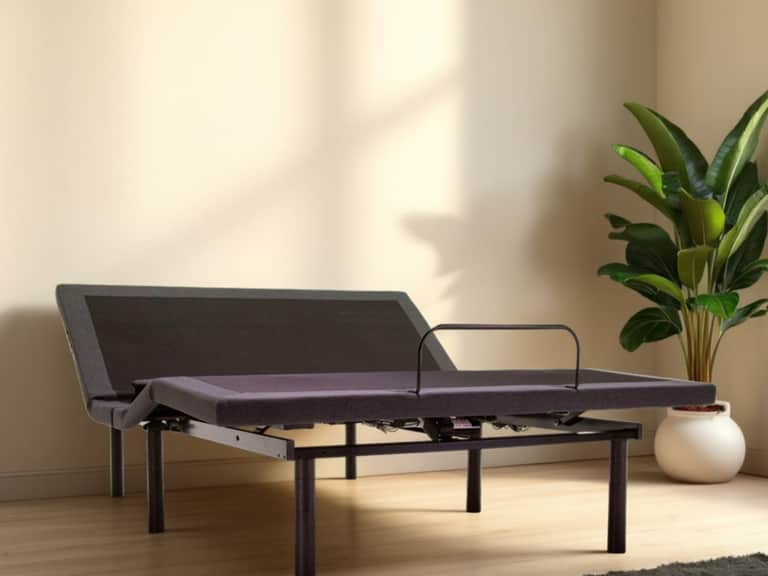
Check the recommended foundation. A mattress may need a supportive platform or a particular type of slatted base, with spacing limits specified by the manufacturer. An unsuitable base can affect performance and, in some cases, warranty eligibility. If you plan to use an adjustable base, verify explicit compatibility rather than assuming that a flexible latex construction will work with every mechanism.
Latex mattresses can be heavy, especially when their layers are thick or the design is all-latex. Delivery, stair access, rotating the mattress, moving it between rooms, and replacing bedding are practical considerations. Ask whether the mattress arrives compressed, whether it requires assembly, and what help is included. These questions may seem distant from sleep, but they can determine whether a purchase fits everyday life.
Care instructions should be clear. A removable cover may not be washable, and latex foam should not be treated as though it were a standard household cushion. Protectors can help shield a mattress from spills and routine wear, but check that the protector fits and does not noticeably change the feel. Cleaning and airing instructions should come from the manufacturer.
A practical checklist for comparing options
When product descriptions begin to blur together, return to a short list of verifiable details. Comparing like with like makes it easier to distinguish a genuine difference from a difference in marketing language.
- Material composition: Is the latex natural, synthetic, or blended? What other materials appear in the mattress and cover?
- Layer construction: What is each layer made from, how thick is it, and how is it arranged?
- Firmness information: Is the rating defined, and is it offered in more than one feel?
- Process and specifications: Is the latex identified as Dunlop or Talalay, and are relevant details provided for the specific model?
- Certifications: Which component or claim does each certification cover?
- Fit and compatibility: Are dimensions, foundation requirements, and adjustable-base compatibility stated?
- Trial and returns: How long is the trial, what fees apply, and how is the mattress collected if returned?
- Warranty and care: What defects qualify, what exclusions apply, and how should the mattress be maintained?
- Delivery logistics: Consider weight, packaging, access through doors and stairs, setup, and removal of an old mattress.
Keep the checklist tied to your own priorities. If you sleep hot, investigate the whole sleep surface instead of relying on a “cooling” label. If you share a bed, ask about the feel on each side, motion, and edge use. If material sourcing is central, seek documentation that explains the scope of the claim. A specification matters most when it answers a question you actually have.
What to expect from a trial
A new mattress can feel different from a familiar one. That does not mean every uncomfortable sensation will disappear, or that a mattress needs a fixed adjustment period to become suitable. It does mean that an immediate first impression may not capture how the bed feels across a range of nights and positions. Give yourself a fair chance to assess it, while taking persistent discomfort seriously.
Before the purchase, read the trial terms from beginning to end. Some require a minimum period before a return can be requested; others have fees, geographic limits, or rules about condition and packaging. Confirm how the company handles donation or pickup, and whether a return means a refund, an exchange, or store credit. The phrase “sleep trial” can cover very different arrangements.
During the trial, note how you feel in the morning, whether pressure is concentrated in particular areas, and whether the mattress makes changing position comfortable. Keep the pillow and bedding consistent at first if you can; changing several elements at once makes it harder to tell what is responsible for a difference. These observations are not a medical assessment, but they can guide a practical decision.
The material is a beginning, not a verdict
Natural latex can offer a distinctive combination of buoyancy, quick response, and varied construction options. Those qualities make it worth considering, not automatically right for everyone. The material name cannot tell you whether the firmness will suit your body, whether the layers will relieve pressure, or whether the finished mattress meets your expectations for sourcing and care.
Good shopping begins with a clear account of your own comfort needs and ends with close attention to the details behind the label. Compare the full build, ask what claims mean, and examine the practical terms as carefully as the technical ones. A thoughtful decision is less about finding a universally perfect mattress than about finding a well-documented design that fits the person who will sleep on it.
That is the useful promise of a natural latex mattress: not a miracle, and not one fixed sensation, but a material whose performance can be understood when its construction is plainly described. The best choice is the one that makes sense on paper, feels comfortable in practice, and holds up to the questions that matter before the first night—and after it.